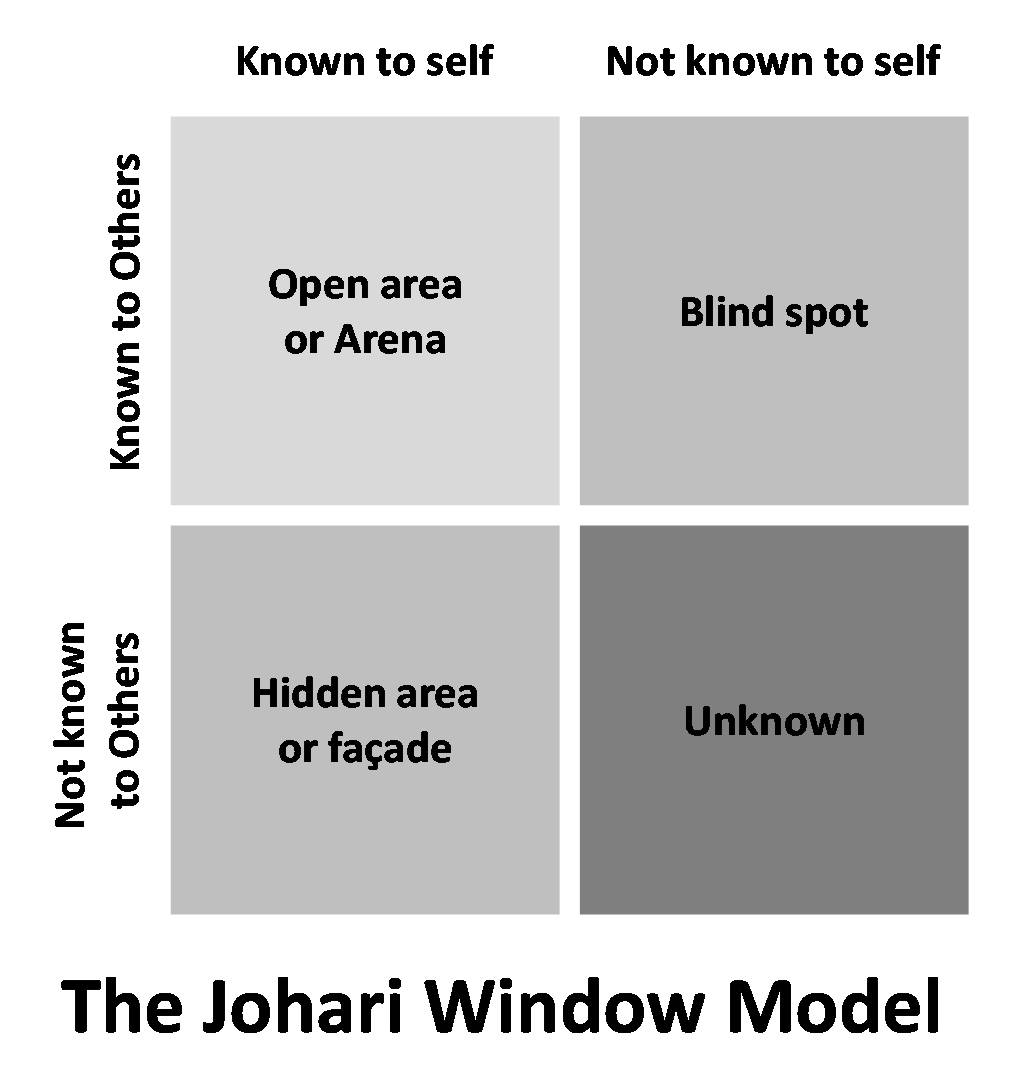
Seeing Through the Johari Window
A common topic of conversation during the quarterly meetings of the Tennessee Fire Chiefs Association is enhancing leadership skills through effective communications. This is important to the success of any fire service agency or team as it strives to provide the best possible fire protection and life safety services in a community. In a fire chief’s presentation during one of this past year’s meetings, the chief brought up an organizational communications model that I was first introduced to during my undergraduate studies and have not given much thought about since: the Johari Window.
Does anyone else remember this communications model? Developed and named after psychologists Joseph Luft and Harry Ingham (it is a combination of their names), the Johari Window helps people to realize heightened self-awareness and perception, thereby enhancing communications and trust in a team dynamic. Through stronger interpersonal relations, less restricted lines of communication can be formed.
In short, the window is made up of four quadrants, and these are the panes for the flow of communication as one gives and receives information. They include:
- Open areas: things that you and everyone else knows about you.
- Blind spots: things you do not know about you, but others do.
- Hidden areas: things only you know about you.
- Unknowns: things that neither you nor anyone else knows about you.
In the fire chief’s presentation, the premise was put forward that great leaders expand their open areas by learning about their personal blind spots. In the model, both of these panes contain information about a person that is known by others. Could this same premise work for us as we strive to build trust with those we serve through the Institute for Public Service? I think so. How we view those we serve is important, but probably more so is how they view us. Our credibility is incredibly important, and it is earned daily with those we serve through technical competence, ethical judgment and the value that we place in building trust.
Expanding open areas requires two deliberate actions. The first is appropriate self-disclosure—being open and honest. This is what we project through our windows for all to see. The second is to discover and address our blind spots. We need to know what others see when they look inside at us. Knowing and working on our blind spots can move our service delivery to our customers from good to great!
When revisiting the Johari Window model, I discovered three steps that I can take to make sure the view through the window is not obstructed in either direction. I can practice purposeful transparency by being clear about how I can help and explaining any challenges or limitations that might exist as soon as they are known. There are many within IPS who already excel at modeling openness, and I can follow their lead. Next, I can listen intently. Truly understanding a customer’s needs will help to maximize my positive impact while working to meet those needs. And finally, I can invite and normalize feedback to shed light on my blind spots. This can provide all sorts of opportunities for me to improve the ways I serve my customers. Maybe they can work for you too.
If you have some time this week, do a quick internet search and review the Johari Window model for organizational communications. It’s easy to find and a neat tool to better understand relationships which can lead to personal growth and professional success. Like me, you might have some spots on your window that could stand to be a little clearer in the new year.